

October 19, 2026
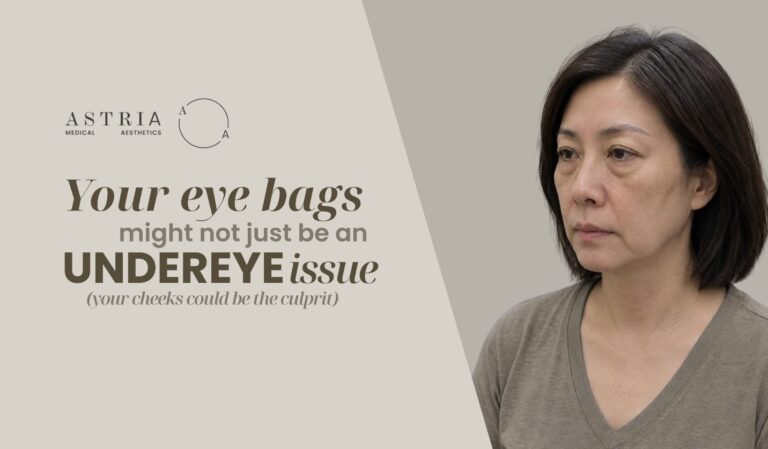
When you look in the mirror and notice more prominent eye bags, it is natural to assume that the problem is coming entirely from your lower eyelids. But sometimes, the under-eye is only where the problem becomes visible – not where it starts.
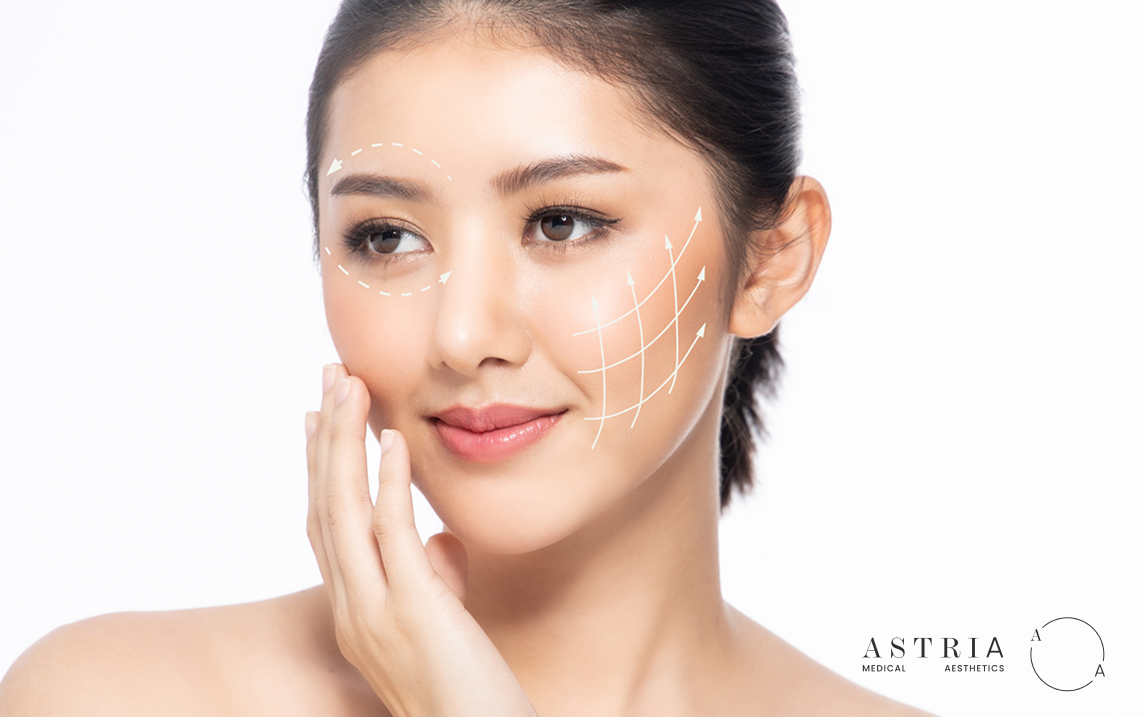
A change in the mid-cheek can alter the way the entire lower eyelid looks. Loss of volume in the cheek, flattening of the cheek’s natural projection, or downward movement of the cheek tissues can make the transition between the lower eyelid and cheek more obvious.
Table of Contents
Toggle
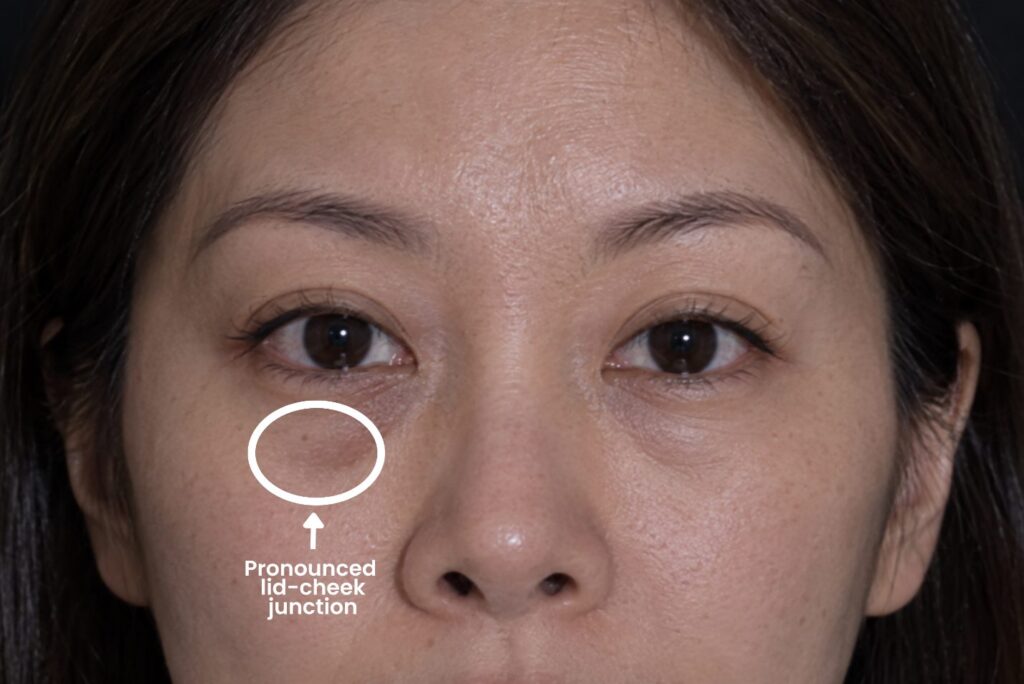
The boundary where your lower eyelid meets your upper cheek is known as the lid-cheek junction. In a youthful face, this transition is smooth. The cheek sits high on the cheekbone, acting much like a firm cushion or scaffold supporting the lower eyelid tissue from beneath. When this transition is smooth, light tends to pass gradually from the lower eyelid onto the cheek.
When the transition becomes more pronounced, you can start to see:
Think of your mid-cheek as a firm, plump cushion that supports your lower eyelid. Deep beneath your skin, you have pockets of natural fat that give your cheeks their youthful, rounded shape1.
As we age, some deeper facial fat compartments can lose volume, while other fat compartments may shift or become more prominent. As your cheek cushion deflates, the smooth transition between the lower eyelid and cheek can become hollower and more defined, giving an appearance of more prominent eye bags.
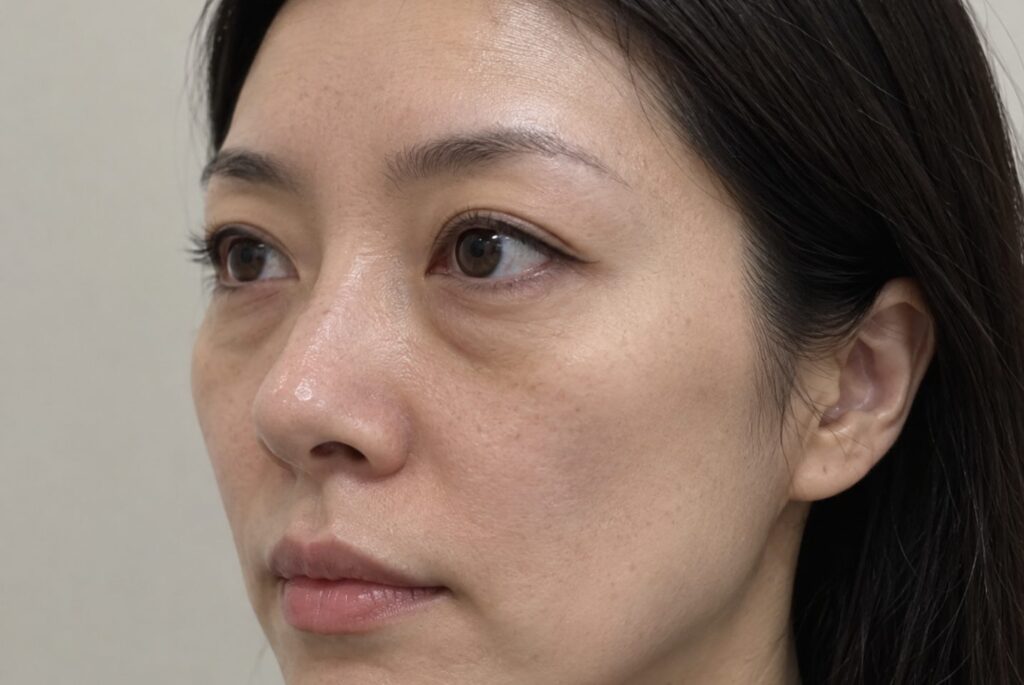
When your upper cheek loses its full, firm structure, the skin on top starts to sag downward. This loss of lift leaves a flat or sunken mid-face, which exaggerates the contrast between your cheek and your lower eyelid.

It might sound surprising, but the bones in our face naturally lose a tiny bit of mass over time2. The facial skeleton also undergoes gradual age-related remodeling, including changes around the upper jaw and orbital rim (bone eye socket).
Think of your cheekbones as poles holding up a tent. If the poles get shorter, the tent sags. Without strong bone structure under your cheeks to hold everything up, the soft tissue beneath your eyes sinks backward, making shadows beneath the eyes more noticeable.
If your cheek is deflating, why doesn’t your whole face drop evenly? This is because your skin is attached to your bone in specific spots by tiny, strong bands called ligaments3.
Retaining ligaments and other fibrous attachments help anchor the soft tissues to the underlying facial structures. As surrounding tissues lose volume or change position, these relatively fixed attachments can contribute to the more defined grooves and transitions seen around the lower eyelid. Think of it like a seatbelt attached to a cushion: when the cushion changes shape, the fixed attachment can become more noticeable.
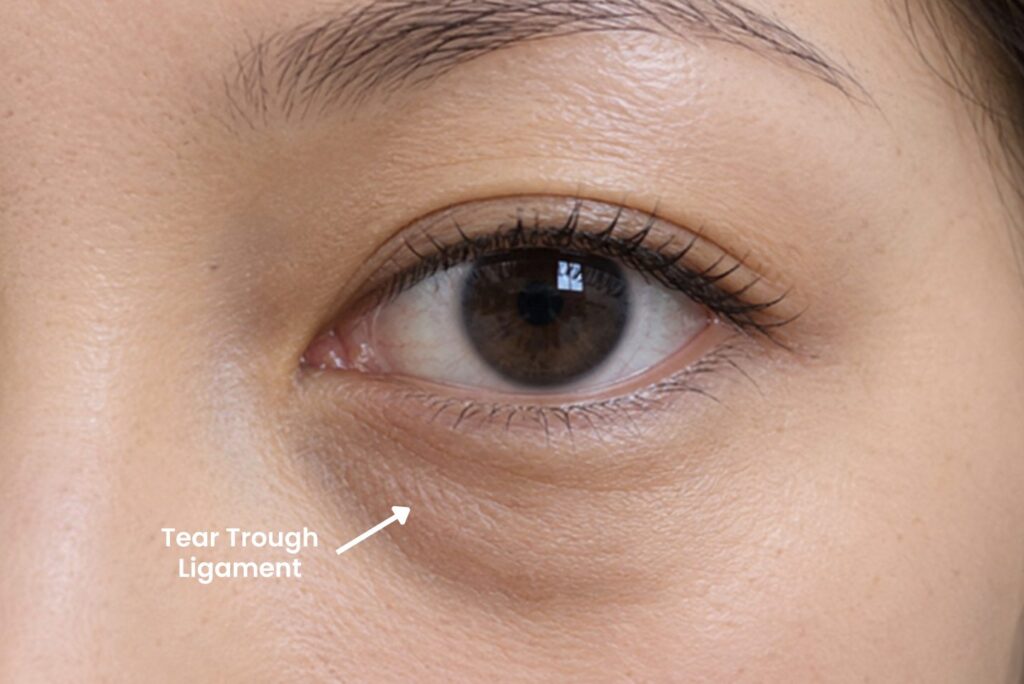
If you are trying to figure out whether your eye bags are due to undereye fat protrusion or volume loss in your cheek, here are some key signs to look out for:
You Have Puffiness Above A Hollow: If you see fullness under the eye followed by a hollow or groove, the stark contrast between the two makes the eye bag look larger than it actually is. Mid-cheek volume loss and age-related skeletal changes may be contributing to a more noticeable tear trough and eye bag1,3.
Your Cheeks Have Become Flatter: Compare older photographs. If your cheeks once looked fuller beneath the eyes but now appear flatter or less projected, mid-cheek volume loss and facial skeletal recession are making your tear trough and eye bags significantly more noticeable2.
Your Eye Bags Became More Obvious As Your Midface Changed: If your eye bags appeared alongside flatter cheeks, deeper nasolabial folds, or a heavier-looking lower face, your under-eye issues are part of a more complex volume change rather than an isolated eyelid problem4.
They Look Much Worse Under Overhead Lighting: Strong overhead lighting such as in offices, lifts, or fitting rooms casts harsh physical shadows into the hollow beneath the eye, exaggerating the depth of the bag compared to softer lighting4.
For an accurate assessment to diagnose the cause of your eye bags it is recommended to schedule a proper consultation with a doctor.
If mid-cheek volume loss is contributing to your eye bags, treating the under-eye alone may not address the entire problem.
A 39-year-old female came in concerned about increasingly prominent eye bags and a tired-looking appearance. She noticed it more after going through significant weight loss with cardio within a few months.
Clinical Assessment: Examination revealed mild-to-moderate lower-eyelid fullness paired with a pronounced hollow beneath the eyes, caused by rapid depletion of the mid-cheek fat pad and reduced anterior cheek projection5. The assessment confirmed that her eye bags were largely exaggerated by this sudden loss of mid-cheek structural support.
Treatment Approach: Rather than treating the lower eyelid in isolation, the treatment plan first focused on restoring appropriate mid-cheek support. Carefully placed dermal filler was used to improve cheek projection and soften the lid-cheek transition1,5.
The Outcome: Rebuilding the cheek foundation helped the mid-cheek appear more supported and smoothened the transition of the lid-cheek junction. The remaining lower-eyelid fullness was then reassessed before considering whether any direct under-eye treatment was necessary. With mid-face support restored, the remaining lower-eyelid fullness appeared far less pronounced, allowing for a conservative reassessment before deciding if any direct under-eye treatment is required.
Conclusion
Your eye bags may be an under-eye issue but they may also be partly shaped by what is happening around the eye. Mid-cheek volume loss, cheek descent, tear-trough hollowing and lower-eyelid fullness can work together to make the under-eye look heavier or more tired.
At Astria, a proper assessment is always done first to determine whether the problem is truly coming from your eyes or whether your cheeks are playing a bigger role than you realize. Schedule a consultation with us today to find out what is truly contributing to your under-eye concerns.
Yes, in selected patients. If mid-cheek volume loss is creating a deeper hollow or stronger shadow beneath the eyes, improving cheek support can soften the lid-cheek transition and make the eye bags appear less prominent.
Yes, it can happen. Significant or rapid weight loss can reduce facial soft-tissue volume, including in some mid-cheek compartments. This can make existing hollows or under-eye shadows more noticeable in some patients.
Not entirely as they target different layers. Energy-based devices help tighten lax skin and firming the deep SMAS layer, but they cannot replace deeper lost volume from depleted fat pads or bone recession. While HIFU or radiofrequency can firm the overlying cheek skin, structural volume is still needed to fill the physical hollow beneath the eyelid.
Sagging cheeks can contribute to shadowing beneath the eyes by deepening the hollowness in the lid-cheek junction. However, dark circles can also be caused by pigmentation, visible blood vessels or thin skin, so not every dark under-eye is caused by cheek sagging.
When performed correctly by an experienced doctor, unlikely. It happens only when excessive products are placed without considering the patient’s existing facial structure. With the right amount used it restores lost volume whilst keeping you looking like your natural self.

Dr. Marcus earned his Bachelor of Medicine and Bachelor of Surgery (MBBS) from Newcastle University in the United Kingdom. His early medical training included rigorous rotations across multiple specialties in both the UK and Singapore, providing him with a strong foundation in patient care and clinical excellence…

Whether you have questions about our treatments, want to book an appointment, or simply like to learn more about how we can help you achieve your skin goals, our team is here to assist!

Astria Medical Aesthetics believes in a sustainable aesthetic journey. Beauty can be a continuous, timeless goal.
51 Bras Basah Road, #04-06A
Lazada One, Singapore 189554
OPENING hours
Monday – Friday
10.30am – 8.30pm
Saturday
10.00am – 6.30pm
Sun & PH closed
contact
Connect with us
links