

October 19, 2026
Tear trough filler is often a hyaluronic acid-based gel that is injected into the groove between the lower eyelid and the cheek. It softens hollowness and the shadow that hollowness casts, which can make the eyes look less tired. It suits people whose under-eye darkness comes mainly from volume loss rather than pigment or eye bags, and because it is hyaluronic acid, it can be dissolved if needed.
Table of Contents
Toggle
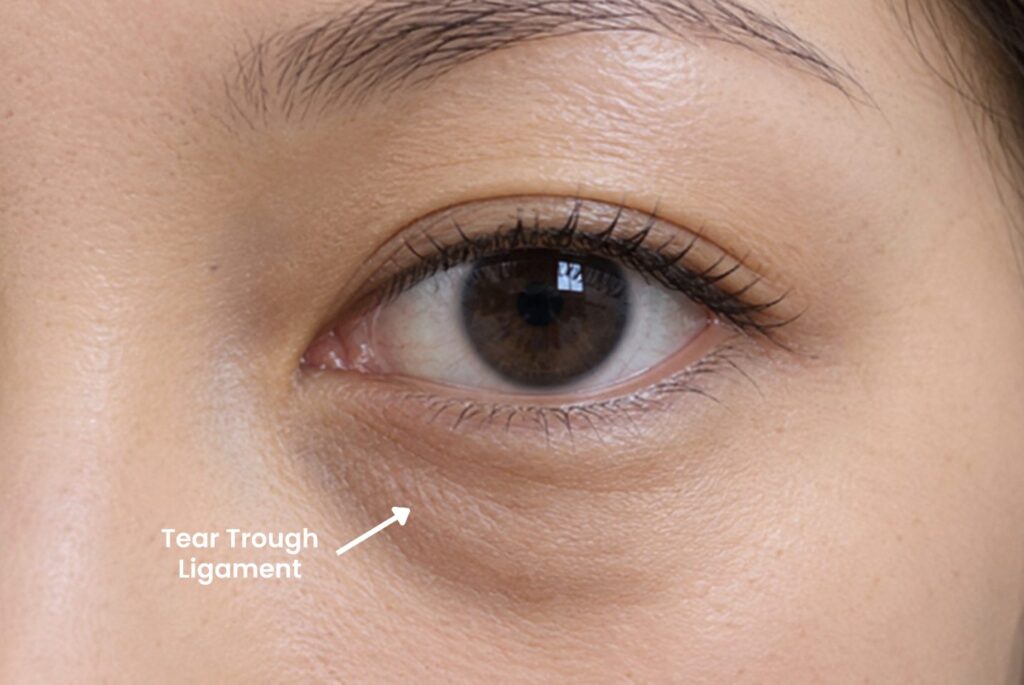
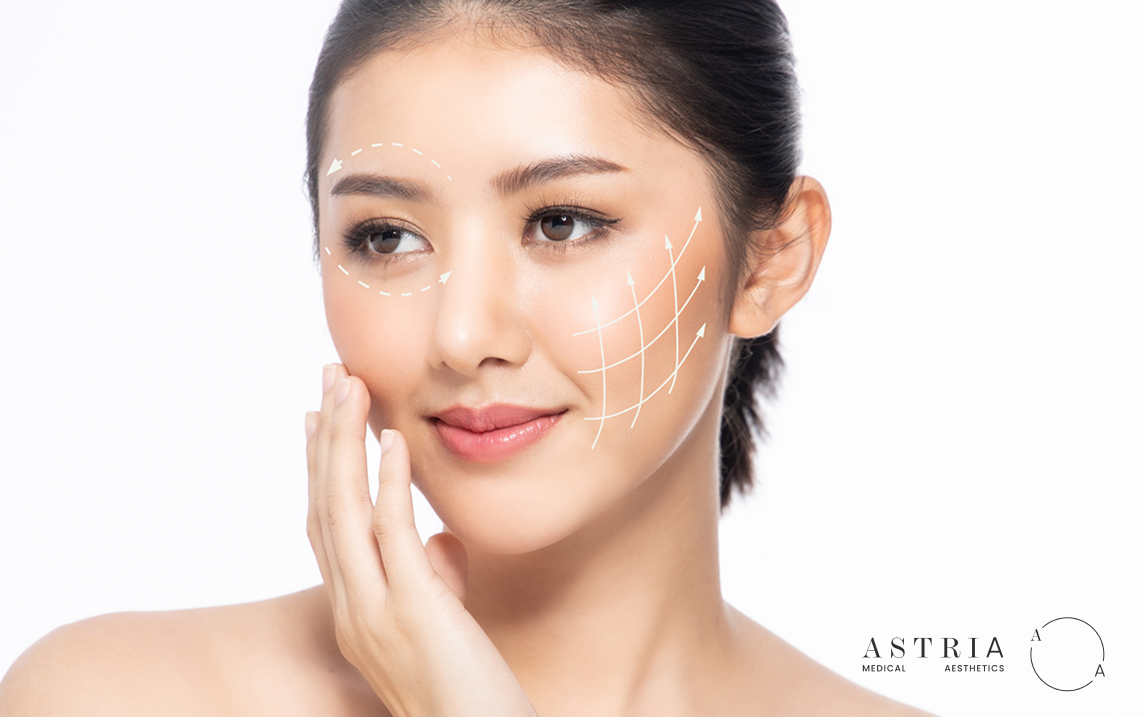
The tear trough is the groove that runs from the inner corner of the eye down and outward along the top of the cheek. With age, the fat and bone support in this area reduce and the skin thins, so the groove deepens. It then catches light differently and casts a shadow, which many people see as a dark circle or a tired look.
This hollowing is one of the four recognised types of dark circle, known as structural dark circles.
Hyaluronic acid is a substance the body already makes, it naturally attracts water which also helps add volume. Filler, containing hyaluronic acid, when placed carefully beneath the tear trough helps lift the groove so the lower eyelid blends more smoothly into the cheek. With less of a hollow, there is less shadow.
| Likely To Suit | Likely Not To Suit |
|---|---|
| A visible hollow or groove under the eyes | Large eye bags caused by fat pushing forward; filler can make these look heavier if incorrectly placed |
| A “tired” look from shadow rather than pigment | Brown, pigmented dark circles; filler does not treat pigment, and Pico Laser will be more suitable |
| Reasonable skin thickness under the eyes | Very thin, translucent skin, where filler can show as a bluish tinge if placed too superficially |
| No persistent under-eye swelling | Existing swelling on the upper cheek (malar oedema), which filler can worsen |
| Realistic expectations of a softening, naturally refreshed look | Pregnancy or breastfeeding, active skin infection near the eyes, or a history of reaction to fillers |
Clinical evidence suggests that correcting tear trough hollows with hyaluronic acid (HA) fillers can improve structural shadowing but may not resolve dark circles caused by pigmentation or visible blood vessels1. Understanding the underlying causes is essential to selecting the most appropriate treatment approach.
In a trial with 12 patients with tear trough deformities, all 12 patients were treated with hyaluronic acid fillers. The outcome showed that HA filler successfully replenished volume and smoothed out the physical tear trough contour in all 12 patients. While the visual appearance of “dark circles” had mixed results, with some patients noticing that their under-eye area actually appeared darker post-treatment. The review concluded that while fillers when placed correctly can improve structural shadows caused by hollows, they cannot fix true skin pigmentation or prominent blood vessels1.
The review highlighted that under-eye dark circles (periorbital hyperpigmentation) are rarely caused by a single issue. Instead, they stem from a combination of pigmentary (excess melanin), vascular (visible blood vessels through thin skin), and structural factors (shadowing created by tear trough hollowing and fat pad herniation).
This highlights the importance of accurate diagnosis before treatment, as a multi-modality approach may be needed to address the different factors contributing to under-eye concerns.
1. Assessment. The doctor starts by evaluating your unique eye contour to determine whether your dark circles are caused by structural volume loss (hollowing), pigmentation, prominent fat bags, or a combination. This step ensures under-eye filler is an appropriate treatment option for you, or if a complementary approach like skin boosters or energy-based device would deliver a better result.
2. Numbing. A medical-grade topical numbing cream is applied prior to treatment to minimise any discomfort. Furthermore, some hyaluronic acid fillers also contain lidocaine, which is a local anaesthetic that concurrently numbs the area as the gel is placed, ensuring a gentle and smooth experience.
3. Injection. Using either an ultra-fine needle or a smooth, blunt-tipped micro-cannula, tiny micro-droplets of filler are placed slowly along the hollowness in the undereye.
Immediately after the treatment, you may notice a visible difference once volume is added and the hollowness is filled. While every individual’s skin responds at its own pace, you can typically expect to see the full initial results emerge within one to two weeks, once the product settles.
Because the treatment works by building on your skin’s natural support structures, how long these results last naturally vary from person to person. Factors like the specific product used, the volume injected, and your body’s unique metabolic rate all play a role, though most patients notice their filler lasting 8-12 months before a touch-up is needed.
When performed by an experienced doctor on a suitable patient, tear trough filler is generally well tolerated. The under-eye area does, however, need particular care. It is worth understanding the risks before deciding.
It is completely natural to feel cautious about treatments near the eyes. Safety data from the American Academy of Ophthalmology highlights that over 90% of under-eye filler side effects are mild – most commonly redness, swelling, or bruising at the injection site2. If mild bruising does occur, it typically fades gently on its own over 3-5 days, easily covered by concealer as your results settle.
Very rarely, filler can enter or press on a blood vessel and block the blood supply to the skin, with the most serious possible consequence is loss of vision.
Hyaluronic acid filler can be dissolved with an enzyme called hyaluronidase. This is useful for correcting lumps, overfilling or a bluish tinge. However, the best way is to prevent any unwanted complications from occurring, which is why technique and experience matters the most when it comes to placing fillers.
In Singapore, tear trough filler can only be performed by a qualified medical doctor who is registered with the Singapore Medical Council (SMC) and holds a valid Certificate of Competence (COC) for dermal fillers.
The cost of tear trough filler session in Singapore typically ranges between $700 to $1,200 per session, depending on factors like amount of filler needed and the product used. Many people need a small amount in the tear trough, and some need a top-up at a review.
Most people feel mild pressure and occasional tugging with the cannula. Numbing cream and the local anaesthetic mixed into some under-eye fillers keep discomfort low.
Bruising can occur because under-eye skin is thin and has many small blood vessels. It usually fades within 3-5 days.
Yes. Hyaluronic acid filler can be dissolved with an enzyme called hyaluronidase. This can correct lumps, overfilling or a bluish tinge.
It helps dark circles caused by hollowing, because it removes the shadow. It does not treat brown pigmented or vascular dark circles, which need a different approach.
It is generally well tolerated when performed by an experienced doctor on a suitable patient. Most side effects are mild bruising and swelling. Rare but potential risks, including blocked blood vessels, are why the treatment should only be performed by a doctor familiar with the anatomy.
The Tyndall effect is a bluish tinge that can appear when filler sits too close to the surface of thin skin. It can sometimes disappear as the product settles or if needed can be corrected by dissolving the filler.
In a patient with large eye bags, filler that is incorrectly placed can add volume in the wrong place and make the area look heavier. That is why eye bags are assessed first and if deemed suitable, accurate placement with low volume prevents the heaviness.

Dr. Marcus earned his Bachelor of Medicine and Bachelor of Surgery (MBBS) from Newcastle University in the United Kingdom. His early medical training included rigorous rotations across multiple specialties in both the UK and Singapore, providing him with a strong foundation in patient care and clinical excellence…

Whether you have questions about our treatments, want to book an appointment, or simply like to learn more about how we can help you achieve your skin goals, our team is here to assist!

Astria Medical Aesthetics believes in a sustainable aesthetic journey. Beauty can be a continuous, timeless goal.
51 Bras Basah Road, #04-06A
Lazada One, Singapore 189554
OPENING hours
Monday – Friday
10.30am – 8.30pm
Saturday
10.00am – 6.30pm
Sun & PH closed
contact
Connect with us
links