

Our Insights

Dr. Marcus Chng

May 6, 2026

Selecting the Best Aesthetic Clinic for Pico Laser in Singapore: A Focus Beyond The Pico Device

Best Aesthetic Clinic for Pico Laser in Singapore

How to Choose a Top Pico Laser Clinic

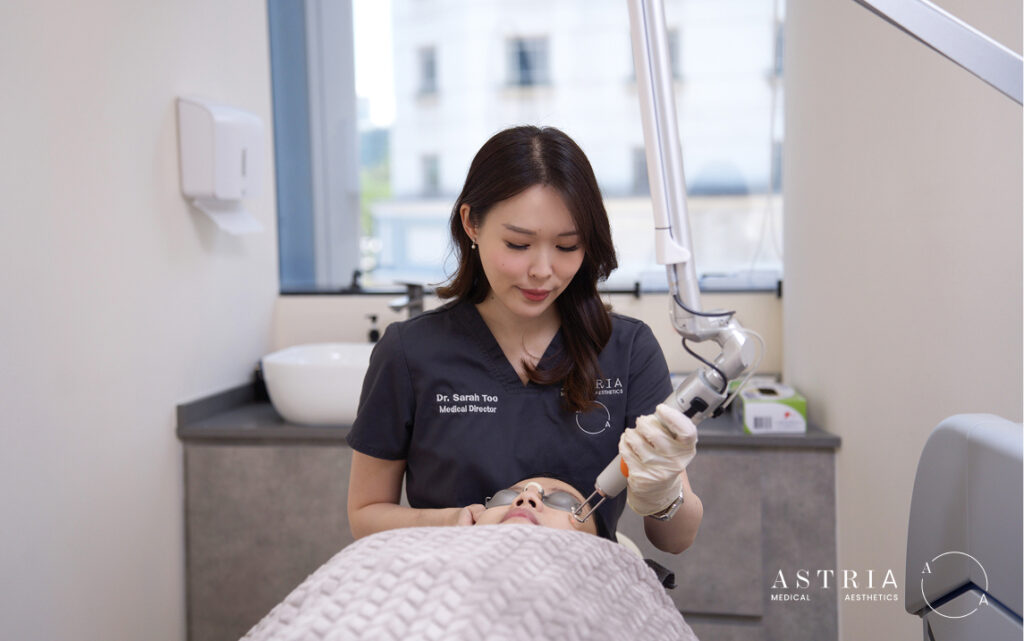
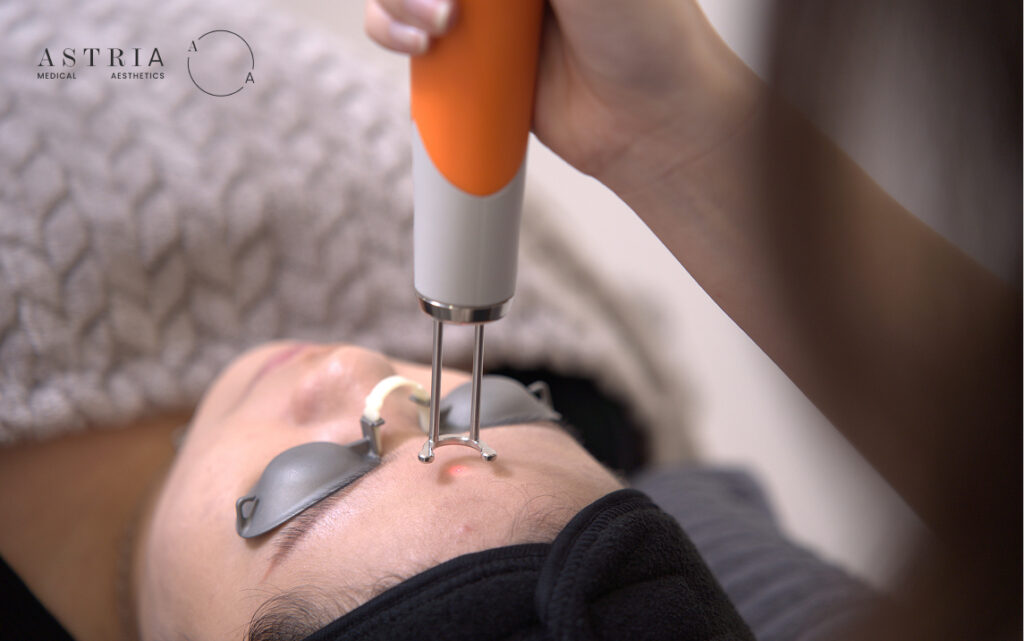
For those seeking the best aesthetic clinic for Pico Laser in Singapore, the search often ends at the brand name of the machine. However, outcome quality is driven by four lesser known factors: Diagnostic Tools, Asian Skin Type Matching, Healing Interval, and Post Care Protocol.

A Pico Laser Clinic Audit Comparison


Factor
Top-Tier StandardStandard/Mass Market
1. Diagnostic ToolsUV or Polarized 3D Depth ImagingVisual mirror pointing and standard cameras
2. Asian Skin MatchingEnergy calibrated for Asian skin tones and specific conditionOne-size-fits-all settings
3. Healing Interval3–5 Weeks (Biological clearance)2 Weeks (Risk of over-drying the skin)
4. Post Care ProtocolGuided post care instructions and follow ups; Access to Active Restoration (Exosomes/DNA)Basic Moisturizer/SPF, sometimes no post care at all

Why "Famous" Pico Brands Can Be Risky for Asian Skin

A major red flag in the Singapore market is the “Brand-First” approach. Many globally famous Pico lasers were originally optimized for Fitzpatrick Type I & II (Caucasian) skin. Caucasian skin is generally thicker and less prone to pigment-producing reactions under thermal stress.

  • The Asian Skin Bias: Singaporean skin (predominantly Type III & IV) is highly reactive. Using a machine with settings meant for lighter skin can lead to Post-Inflammatory Hyperpigmentation (PIH) -where the laser effectively “burns” the pigment deeper into the skin or triggers the melanocytes to produce more melanin as a defense mechanism.
  • Avoid Self-Prescribing: Relying solely on a brand name is risky. A top clinic knows that the same machine requires vastly different pulse durations and fluences for an Asian patient versus a Caucasian patient. The goal is “Photo-acoustic” shattering, not “Photo-thermal” burning.

Based on our experience treating Fitzpatrick III and IV skin types at Astria, we prioritize selecting appropriate Pico devices that minimize the risk of rebound hyperpigmentation. As prevailing regulations prohibit the naming of brand names, we welcome questions on specific Pico laser devices.

Cost vs. Value of Pico Laser

Understanding the Cost vs. Value: Why "Cheap" Pico is Often the Most Expensive

In the Singapore aesthetic market, you will see Pico Laser trials ranging from $50 to $500. While the upfront price is tempting, the “hidden” costs of low-cost clinics often make them the most expensive option in the long run.

In Singapore’s fast-paced environment, time is a finite currency. “Cheap” Pico treatments typically use low-fluence settings to avoid complications in a high-volume setting. You may spend 12 months attending 20 low-quality sessions to achieve the same result that a clinical expert could achieve in 8 sessions.

The most significant hidden cost is the Correction Fee. When an inexperienced practitioner fails to account for Asian Skin Type Matching, they can cause PIH or hypopigmentation (white spots). Fixing a “botched” laser job often requires specialized corrective lasers and months of medical-grade skincare that can cost 3 to 5 times the price of the original “saved” amount.

Optimal results depend on the consistency of the laser’s energy delivery. Regular technical maintenance and the timely replacement of optical consumables are essential to keep the beam profile stabilized. Without this strict upkeep, the laser may lose its uniform distribution, increasing the risk of uneven thermal impact on the skin

See Through The Unnecessary Marketing Hype

It is essential to avoid the marketing lure of “4-in-1” or “Dual Laser” sessions that claim to solve multiple skin problems in 15 minutes.

  • The Thermal Stacking Risk: Every laser pass adds heat to the skin. Using multiple different laser platforms in one session can exceed your skin’s limit. When heat stacks up, it causes bulk heating, which is the primary cause of laser burns and post-laser darkening and dryness in Asian skin.
  • The Single-Platform Advantage: Premium Pico devices are designed to be versatile. They natively handle multiple wavelengths (e.g., 532nm for surface, 1064nm for deep) with high precision.

Beyond simple pigment removal, Astria doctors leverage our device’s advanced Fractional setting. This creates Laser Induced Optical Breakdowns (LIOB) within the skin to specifically address enlarged pores and acne scars without the risks associated with “laser stacking.”

The Truth About Treatment Intervals: Why You Must Wait

Premier aesthetic clinics specializing in Pico Laser will often be the ones that tell you to wait.

  • The Healing Interval Timeline: Pico lasers shatter pigment into microscopic fragments. Your body’s immune cells (macrophages) then process and clear these fragments. This natural metabolic clearing takes 3-6 weeks.
  • The Over-Treatment Trap: Treating the skin every 2 weeks interrupts the healing cascade. When the skin is hit again before it has finished clearing the previous “dust,” the fragments can become trapped or cause localized inflammation.

The Astria philosophy prioritizes biological skin recovery over session frequency; we typically schedule Pico treatments at 4-week intervals to allow for full pigment clearance.

Premier aesthetic clinics specializing in Pico Laser

Red Flags in Consultations: Why Camera Photos Are Not Enough

If your consultation consists of you pointing at a spot in the mirror and the doctor simply agreeing to “zap it” you are likely at a factory-style clinic.

  • The Surface Trap: Standard photos only capture what is visible to the naked eye. Many pigmentation issues have “roots” deep in the dermis that are invisible under standard room lighting.
  • Diagnostic Tools: A top-tier clinic utilizes medical-grade 3D Depth Mapping. This technology uses cross-polarized and UV light to virtually “slice” through skin layers, highlighting vascularity, UV damage, and pigment depth.

In our clinical practice at Astria, we found that 3D facial analysis provides us with a digital map of your dermal pigment layers that standard photography misses, allowing us to distinguish between surface-level damage and deep-seated pathology.

Why Top Clinics Don't Sell "Unlimited" or 50-Session Packages

A major indicator of a results-driven clinic is the absence of arbitrary, high-volume packages. Clinically, selling a high arbitrary number of sessions before even seeing the skin’s biological response is a red flag. If a clinic pushes “unlimited” passes or 30-50 session packages, they are often prioritizing sales volume over clinical efficacy and skin safety.

ConditionSeverityEst. SessionsFrequency
Sun Spots / FrecklesMild to Moderate4-6 SessionsEvery 3-4 Weeks
Acne ScarsModerate to Deep8-10 SessionsEvery 4–5 Weeks
MelasmaChronic/Mixed10-15 SessionsEvery 4 Weeks
Tattoo RemovalProfessional Ink8-12 SessionsEvery 8 Weeks
Skin RejuvenationDullness5-8 SessionsEvery 3 Weeks

We define success by how quickly we can clear your skin, not how many sessions we can sell. At Astria, we only offer curated treatment plans.

Post-Laser Care: How Top Clinics Manage Your Recovery

Premium Pico aftercare is about Active Barrier Restoration.

Factor 4: Post Care Protocol

Immediate Quenching
(0-2 Hours Post)

We utilize Medical-grade Exosomes or PDRN (Salmon DNA) immediately after the laser to skip prolonged inflammation and move directly to tissue repair.

Hydration Mapping
(Days 1-3)

Use high-purity Hyaluronic Acid and Ceramides to “re-seal” the leaky skin barrier and prevent moisture loss

The Vitamin C Exception

Avoid high-concentration Vitamin C for the first 48 hours to prevent irritation on laser-sensitized skin.

Numbing & Comfort

For a more comprehensive treatment, a medical-grade numbing protocol is beneficial so the doctor doesn’t have to “under-treat” to avoid causing pain.

The 3-Question Test for Your Doctor

Before booking your Pico Laser package in Singapore, ask these three questions:

1. “How are you adjusting the  fluence for my specific Asian skin tone?”

2. “Why is the interval for my next session 3-5 weeks instead of every 14 days?”

3. “Can I see the 3D diagnostic mapping of my dermal pigment layers to understand the target?”

Medically Reviewed by

Dr. Marcus Chng

AESTHETIC DOCTOR

Dr. Marcus earned his Bachelor of Medicine and Bachelor of Surgery (MBBS) from Newcastle University in the United Kingdom. His early medical training included rigorous rotations across multiple specialties in both the UK and Singapore, providing him with a strong foundation in patient care and clinical excellence…

Get in touch

A
A

Whether you have questions about our treatments, want to book an appointment, or simply like to learn more about how we can help you achieve your skin goals, our team is here to assist!

Astria Medical Aesthetics logo - reverse

Astria Medical Aesthetics believes in a sustainable aesthetic journey. Beauty can be a continuous, timeless goal.

address

51 Bras Basah Road, #04-06A
Lazada One, Singapore 189554

OPENING hours

Monday – Friday
10.30am – 8.30pm
(Last appointment: 7.30pm)

Saturday
10.00am – 7.00pm
(Last appointment: 6pm)

Sun & PH closed

© 2026 Astria Medical Aesthetics