Melasma is one of the most persistent skin pigmentation conditions in Singapore. Patients often hear about both Pico Laser and Q-Switch Laser but are confused about which one actually works best. Many clinics only give you a sales pitch without explaining the full story. This article will provide clear, detailed answers to all the questions you should ask before starting treatment, so you can make an informed choice.
Table of Contents
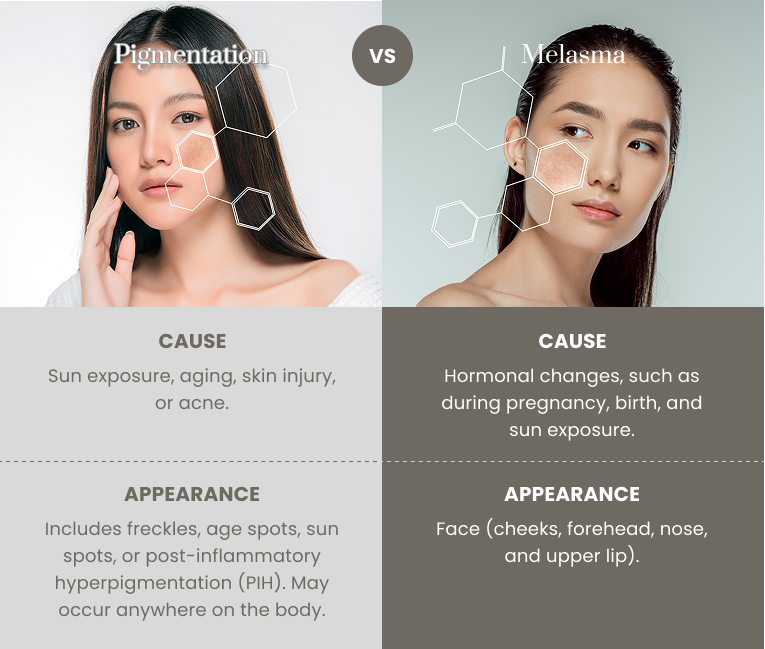
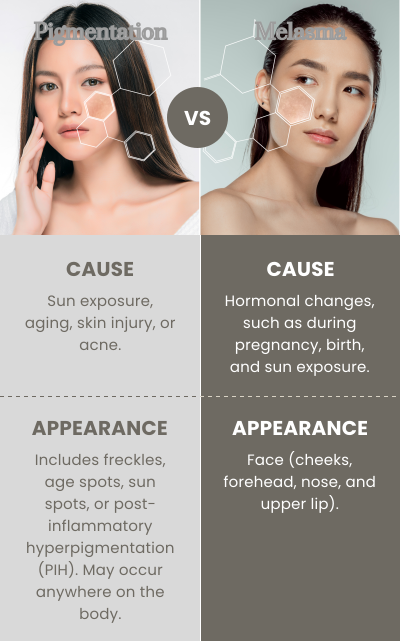
ToggleMelasma appears as brown or grey-brown patches on the face, usually on the cheeks, forehead, nose, and upper lip. It is caused by a combination of factors including sun exposure, hormonal changes, heat, inflammation, and genetics.
Unlike freckles or age spots, melasma pigment is deeper in the skin, making it much harder to treat. Even after treatments that lighten the pigmentation, it can return if triggers are not properly managed.
Singapore’s tropical climate, with high UV levels and humidity, makes melasma particularly challenging. Many patients find that despite using creams and treatments, melasma comes back stronger during hot, sunny months.
Because melasma is influenced by multiple factors, a successful treatment plan needs to combine laser treatment, trigger management, and long-term skincare.
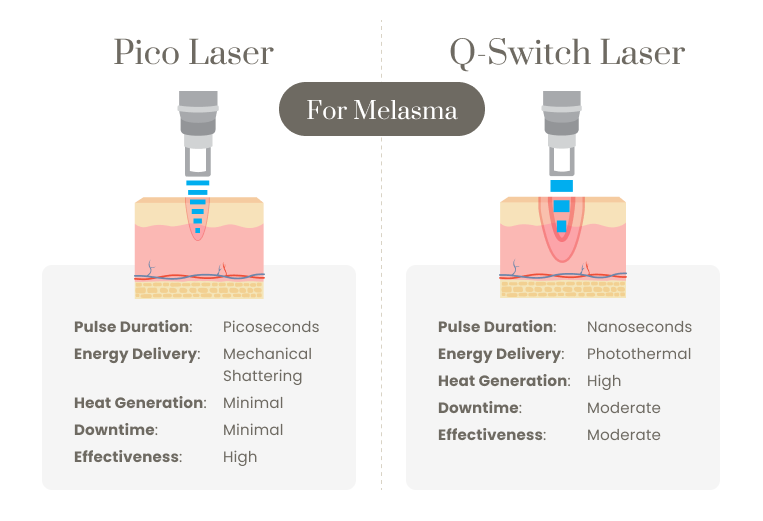
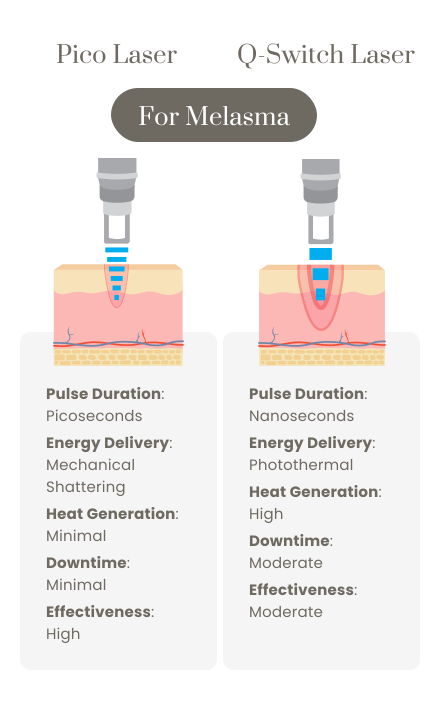
Both lasers target pigmentation, but they differ in how they deliver energy and how the skin responds.
| Nanoseconds | Picoseconds (1,000 times faster) | |
| Heat and light-based | Photoacoustic (shatters pigment mechanically) | |
| Higher, can trigger pigment rebound | Lower, safer for sensitive skin | |
| Can feel more painful | Generally gentler | |
| Slight redness and swelling | Minimal (1-2 days) | |
| More sessions usually needed | Fewer sessions | |
| Moderate | Higher, more consistent results |
The difference may seem technical, but for patients it means Pico Laser tends to be safer, faster, and more predictable for melasma, especially for darker Asian skin types.
Q-Switch lasers were revolutionary in the 1990s and early 2000s. Before Pico technology, Q-Switch was the best option available for treating pigmentation and tattoos. Clinics chose Q-Switch because it worked well for many superficial pigment issues. It was reliable and it was relatively affordable for clinics to purchase and maintain.
However, melasma is not the same as freckles or tattoos. The pigment lies deeper and is sensitive to inflammation and heat. The heat generated by Q-Switch can sometimes irritate melanocytes and make the condition worse over time. Additionally, Q-Switch often requires more sessions to achieve visible results and can be uncomfortable due to heat and stinging sensations.
While Q-Switch still has a place in tattoo removal and other pigment conditions, it is no longer the optimal choice for melasma, especially for patients seeking long-term improvement without frequent rebound.
Pico Laser represents a significant advancement in laser technology for pigmentation. Its advantages include:
Lower risk of rebound pigmentation
Because Pico Laser produces much less heat, it reduces inflammation that can reactivate melasma.
Faster clearance of pigment
Smaller pigment particles are easier for the body to remove, so patients see results sooner.
Improved skin texture
Some Pico Laser devices include fractional handpieces that stimulate collagen, improving overall skin tone and quality.
Gentler recovery
Patients experience minimal redness and swelling, making it suitable for busy adults in Singapore who cannot take long downtimes.
Pico Laser is not a cure. It is a powerful tool that works best when combined with sun protection, trigger management, and appropriate skincare. Your practitioner may also recommend topical or oral medications for melasma. For stubborn or recurring melasma, it offers the most predictable and safe results among current laser options.
It can be confusing and frustrating when melasma darkens after numerous treatments. This usually happens for a few reasons:
Insufficient maintenance
Stopping treatments entirely or skipping follow-ups can allow melasma to recur, even after initial improvement.
Excessive heat
Aggressive Q-Switch settings can trigger melanocytes to produce more pigment.
Laser type
Using a laser not suited for heat-sensitive pigment, like Q-Switch, increases the risk.
Triggers not managed
Sun exposure, hormonal changes, and heat exposure continue to stimulate pigment.
Poor aftercare
Skipping sunscreen, over-exfoliating, or using harsh skincare products can worsen pigmentation.
Understanding these factors is key to avoiding disappointment and achieving long-term results.
Laser alone is not enough. Long-term control requires addressing triggers and maintaining skin health. Key steps include:
| Prevention Step | Why It Matters |
| Daily broad-spectrum sunscreen SPF 50+ | Blocks UVA and UVB that stimulate melanin |
| Avoid heat triggers | Heat from saunas, hot yoga, or cooking can worsen pigmentation |
| Consistent skincare | Ingredients like tranexamic acid, vitamin C, and niacinamide reduce pigment activity |
| Regular maintenance | Follow-up Pico Laser sessions every 2–3 months help sustain results |
| Hormonal management | Monitoring hormonal triggers with your doctor can prevent flare-ups |
Patients who combine treatment with these steps see far longer-lasting results and lower risk of rebound pigmentation.
For most patients in Singapore:
Remember, no laser alone will completely prevent recurrence. Proper maintenance, sun protection, and lifestyle adjustments are critical for long-term control.
Even though Pico Laser is more effective for melasma, Q-Switch hasn’t disappeared. There are a few reasons:
Cost-effectiveness for clinics
Q-Switch devices are generally cheaper to purchase and maintain, making them attractive for clinics that treat a variety of pigment conditions.
Effective for certain indications
Q-Switch is still very good for tattoos, superficial freckles, and epidermal pigmentation where heat sensitivity is less of a concern.
Established track record
Many dermatologists and technicians are experienced with Q-Switch, and it remains a reliable tool for specific treatments.
In short, Q-Switch continues to exist because it serves other patient needs, even if it is less ideal for melasma.
Pico Laser represents a significant improvement over Q-Switch for melasma. It reduces heat-induced rebound pigmentation, clears pigment more effectively, and improves overall skin quality.
The best results come from combining:
By choosing a clinic that follows these principles, patients can achieve lasting improvement and reduce the frustration of recurring melasma.
Whether you have questions about our treatments, want to book an appointment, or simply like to learn more about how we can help you achieve your skin goals, our team is here to assist!
Astria Medical Aesthetics believes in a sustainable aesthetic journey. Beauty can be a continuous, timeless goal.
51 Bras Basah Road, #04-06A
Lazada One, Singapore 189554
OPENING hours
Monday – Friday
10.30am – 8.30pm
(Last appointment: 7.30pm)
Saturday
10.00am – 7.00pm
(Last appointment: 6pm)
Sun & PH closed
contact
Connect with us
links