Yes, Pico Laser is suitable for most skin tones. Parameters need to be carefully adjusted by the doctor to minimise risks of post-inflammatory hyperpigmentation.

Table of Contents
Toggle| Early lightening of superficial spots; skin begins to glow; improvements may be uneven | More visible clearance of sunspots and freckles; tone is more even, though residual spots may remain, especially stubborn or deeper pigmentation | |
| Very subtle improvement, often hard to notice; pigment may temporarily appear more pronounced due to inflammation | Only partial reduction of intensity; melasma often persists due to hormonal and vascular factors; strict sun protection and topical therapies are critical to see gradual improvement over multiple sessions | |
| Slight refinement in texture; pores may feel less congested | Pores appear smoother and less prominent; improvements are gradual and may continue with additional sessions or combination therapies | |
| Minor textural smoothing of superficial scars | Early flattening of superficial scars; deeper scars remain visible; collagen stimulation is ongoing, meaning continued improvement is possible but not complete by this stage |
By the fifth Pico Laser session, the skin is more receptive, and some patients may wish to optimise results faster or address stubborn concerns. While the basic laser protocol continues to provide improvements, there are strategies to enhance outcomes safely and effectively. These include combination treatments and advanced aftercare measures.
Combining Treatments
Strategically combining Pico Laser with other modalities can target deeper pigmentation, acne scars, and textural issues more effectively.
Hydrafacial deeply cleanses, exfoliates, and hydrates the skin, preparing it for optimal laser penetration. Performing a Hydrafacial 1–3 days before a Pico session can reduce post-laser irritation and enhance the absorption of topical serums that stabilise pigment. This combination is particularly beneficial for patients with sensitive or dehydrated skin, helping them achieve smoother, brighter results with minimal downtime.
Carbon Laser Peel is performed immediately before the Pico Laser in the same session. A thin layer of carbon is applied to the skin, which absorbs laser energy and enhances the breakdown of pigment while providing gentle exfoliation. This also reduces sebum production for acne. This combination allows Pico Laser to penetrate more effectively, targeting deeper pigment and stimulating collagen simultaneously. Patients often notice improved skin tone, reduced dullness, and smoother texture right after the session. Performing both treatments together maximises efficiency, minimises downtime, and accelerates results compared to performing either treatment alone.
Pico Laser creates microscopic openings in the skin, which temporarily increase its permeability. When exosomes are applied immediately after the laser, these regenerative vesicles, rich in growth factors and signalling proteins, can penetrate more deeply. This enhances collagen production, supports skin repair, and improves overall tone and texture. This combination is particularly useful for patients with acne scars, texture issues, or pigment that is slower to respond. In Singapore, exosomes are not approved for injections and therefore topical application is the modality of choice.
You would have been familiarized with basic sun protection tips by your 5th session. At this stage, it is imperative to go beyond basic advice to ensure results are achieved.
Using medical grade serums or creams with ingredients like tranexamic acid, vitamin C, niacinamide, or growth factors can stabilise pigment, support collagen, and enhance overall skin health. Daily use maximises the laser’s cumulative benefits.
By the fifth Pico Laser session, the skin has undergone multiple rounds of pigment fragmentation and collagen stimulation. An experienced clinician can optimise outcomes by adjusting laser parameters based on the skin’s response, which is critical for both efficacy and safety.
Higher or lower energy can be selected depending on residual pigment density, skin sensitivity, and treatment goals. For stubborn pigmentation or deeper melasma, slightly higher energy may be applied in controlled passes to enhance pigment fragmentation without causing inflammation. Conversely, for sensitive or reactive skin, lower energy prevents unnecessary irritation or post-inflammatory hyperpigmentation.
Pico Lasers allow precise control of pulse width and repetition rate. Shorter pulses can target fine, superficial pigment, while slightly longer pulses reach deeper pigment deposits. Adjusting pulse frequency influences the cumulative energy delivered per session, enabling targeted treatment for uneven pigment distribution.
Doctors may alter spot size and overlap patterns to ensure uniform coverage while avoiding overtreatment of delicate areas. For example, the malar region or areas with thinner skin may receive smaller, more dispersed spots to reduce irritation risk.
Spacing between sessions can be modified based on skin response. If the skin shows rapid improvement and tolerance, intervals may remain standard. If inflammation or post-laser sensitivity is observed, additional recovery time may be incorporated before the next session to maintain safety while maximising cumulative benefit.
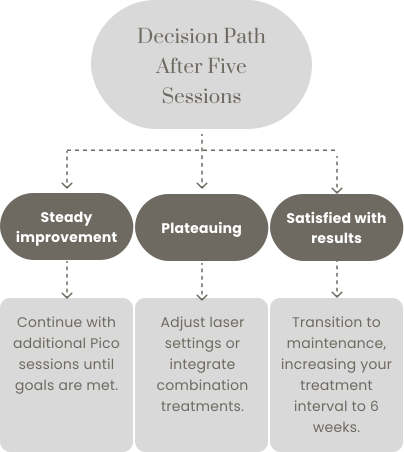
Once you reach the fifth session, it is important to reassess progress.
Continue with additional Pico sessions until goals are met.
Adjust laser settings or integrate combination treatments.
Transition to maintenance, increasing your treatment interval to 6 weeks.
The fifth Pico Laser session is a turning point where early gains are consolidated and deeper improvements begin. Understanding expected results, adhering to aftercare, and strategically combining treatments ensures continued progress. With proper guidance, patients can maintain brighter, smoother, and healthier skin far beyond these initial sessions.
Most patients can apply light, non-comedogenic makeup the next day. However, if there is redness or flaking, it is best to wait 48 hours to avoid irritation.
Downtime is usually minimal. Some patients experience mild redness or warmth for 1-2 days, and very rarely, light peeling.
Yes, Pico Laser is suitable for most skin tones. Parameters need to be carefully adjusted by the doctor to minimise risks of post-inflammatory hyperpigmentation.
Some patients notice brighter skin after one treatment, but issues like melasma, acne scars, or pores typically require multiple sessions for visible and sustained results.
For pigmentation, results may last months to years if sun exposure and triggers are well managed. For acne scars, improvements are usually long-lasting, though maintenance may be needed for skin quality.
Temporary darkening occurs as pigment rises to the surface. It usually resolves within 1–2 weeks.
Whether you have questions about our treatments, want to book an appointment, or simply like to learn more about how we can help you achieve your skin goals, our team is here to assist!
Astria Medical Aesthetics believes in a sustainable aesthetic journey. Beauty can be a continuous, timeless goal.
51 Bras Basah Road, #04-06A
Lazada One, Singapore 189554
OPENING hours
Monday – Friday
10.30am – 8.30pm
(Last appointment: 7.30pm)
Saturday
10.00am – 7.00pm
(Last appointment: 6pm)
Sun & PH closed
contact
Connect with us
links